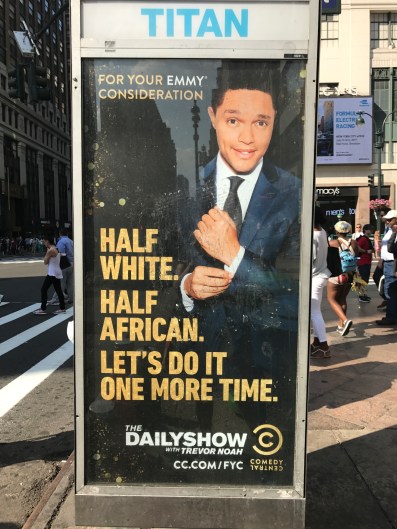
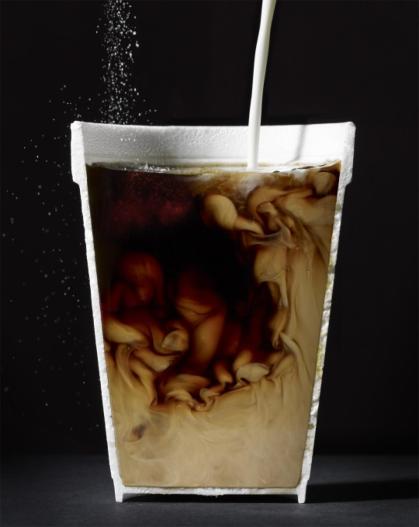
I am 100% white and 100% Nigerian (100% black). I can be all of these things at the same time as a whole person. Not half & half, that’s for coffee (I should put this on a Tshirt or trademark it, don’t steal it!). That is a mouthful, let me break this down.
I should never be made to feel like I have to pick a side when it comes to my ethnic identity and who I was created to be. I grow bored of names like ‘oreo’ and ‘zebra’ and ‘gray’. Seeing light skinned people portrayed on social media seemingly romanticized and fetished, but more like objectified, dripping in privilege with possibly more or less power depending upon circumstance and context. Somehow perceived as unique and exotic while parents are applauded for the children they create. A masterpiece on display “like look, together they blend the best of their genes.” As if to suggest that “you must be mixed with something” in order to be beautiful. Articles running statistics that by 2050 most people will look like me.
It isn’t a secret, yes I am beautiful. Ummm, but so is every other person in my opinion. Beauty that transcends western standards. My green eyes are cool because they appear to be a regular conversation starter and my hair with versatility that has taken me years to appreciate. I would argue, however, that my beauty lies less in the combination of physical attributes and more in the love I have the capacity to give and to receive, my passion, and my imperfections. Clearly I take this very seriously, and I get that some won’t care but I do for myself and for upcoming generations who struggle with their identities.
Tell that to the woman who called me back when I filled out an application because I selected white and black. She asked me to choose one and I thought checking ‘other’ was dismissive. I chose black. She was just doing her job and unfortunately our antiquated systems have not caught up to where we are. That was probably one of the more defining moments in which I accepted that in this society — I am racially black. And there’s no shame in that. I’m proud of it and I am. But nobody close to me told me that was true. Not my parents. Not my grandparents. If anything, it was my brother one year younger than I who introduced this affirmation when we did a series of family presentations (mine on feminism, and his on race). I identify with black culture more than I do white culture, and always have. If you were to look at me and tell me I’m white, I’d be super confused. And we can go back and forth about how various philosophers and theorists have defined it over time. I could use this post to reflect on “one-drop rules”, brown bag tests and passing, miscegenation and colonization. That’s when I really start getting intellectually stimulated. But bottom line, my siblings and I and other individuals who are perceived as people of color don’t always directly benefit from the privileges that white folks do. If my mom was not present in public with me, and you weren’t reading this, you just looked at me, you would probably be drawn to assume I’m black, “mixed” (not a huge fan of this word), or occasionally Brazilian (surprisingly the second top option people guess). If I stood in a room of white people, I too would stand out.
That does not mean that I claim immediate belonging in black community either. I often feel like I’m intruding, being fake by trying too hard, or lack relation if our histories are different. My family is still in Nigeria, for instance, and I have a binder that thoroughly captures my genealogy on my mom’s side complete with addresses before and after their arrival on Ellis Island, but for many of my black brothers and sisters living in America was not a choice. They have trouble tracing back ancestral lines due to their forced and violent removal from Africa for the purposes of slavery. Diaspora spread from corner to corner of the globe. That’s when the realness of my whiteness settles in deeply and I can face moments of intense guilt and shame. And I think lingering in that grief is actually needed, healthy, and appropriate given historical and contemporary challenges. It has kept me in check and in the process, I’ve been deeply affirmed by my black friends who in so many words say, “Olivia, you are one of us.” It’s not required for them to do this, but I have learned from them. Still with me? You can be an oppressed person and embody the oppressor at the same time. I couldn’t articulate until recently that I wanted to celebrate all these parts of who I am without having been to Nigeria or calculated my responses to people’s questions perfectly. I want to be eating egusi soup with my grandma, while we tell stories and sing with aunts and uncles, laughing at something silly one of my cousins did. It’s corny, but I’ve dreamed it for as long as I can remember.
Taking all of these intersectionalities, social categorization makes things complicated to wrap our brains around. As I write this, I’m in Crown Heights in Brooklyn, New York. I am an educated, middle class, white/Nigerian woman, from California fitted with business casual because I like to dress up a lil bit and we had our first day of internship. A good way to describe it would be the way I heard someone else explain that they were “the face of gentrification.” And it’s true. I have benefitted from systems and institutions that still keep people in chains! I look like a hipster, I like working on my functional, but beat-up laptop in coffee shops with artsy shapes on the tops of lattes, and have the blessing of financial resources that allow me to travel from place to place. That is not necessarily reflective of the neighborhood I’m walking around in; there I am an outsider. But there are some struggles you wouldn’t know by looking at me. Like the time my mom was on food stamps, the trips to the food bank, home near foreclosure more times than I can count, and the breaking down of our vehicles time and time again. My father is an immigrant to this country (technically we all are, unless you are of indigenous background) placing me as a first-generation American on his side. My parents are divorced now, but police visited a couple of times that’s how impossible and scary communication could get, and court appearances due to some other personal matters are regular appointments. I am critical of interracial relationships as a result of what was modeled for me. I write this not for pity, comparison, or putting my family on blast, but to provide context as checking people into boxes removes the freedom of acknowledging the full spectrum. And we know this, in general, no one likes to be categorized or labeled on sight. It is our human nature and I’m sure I assume what people are like or where they come from all the time. I guess my point is that I have a story, you have a story. We are distinct, but more connected than we think.
For so long, that story was wishing that I was one or the other– black or white for convenience. Maybe then I wouldn’t be so touchy, so confused, so in between. But that’s where I see Jesus. I can’t hide behind the cracks when I seek Him with all my heart. He reminds me that my various identities are a blessing (like my middle name, Ngozi, meaning blessing), not a curse. And He’s much bigger than what society says I am or we are. That’s a little simplistic and I’m not saying there aren’t real-world implications that result from the color of our skin, class, or even the neighborhood we grew up in. But Jesus, in human flesh, was fully man and fully God so there must be room for complexity in the kingdom. It explains why I’m very passionate about reconciliation because I am an example of what it looks like when two very different people come together and make something beautiful. I see things through a multilayered, multicolored filter because multiethnic is me. I can offer my perspectives as a bridge builder because I’ve experienced how painful it is to feel like you’ve lost points of connection. White people, especially, need to learn how to be more helpful. You too can participate in these conversations, but some I’ve met end up causing more harm. I’ve been resistant, I am angry, and can give you a lecture on the underlying causes of injustice, catch me at your local protest, but I don’t want my reactionary impulses to stop there. As Jesus is redeeming this thing that I’ve tried to sort out on my own, I can hold space for other people doing the same and listen well directing them back to our Creator, our Source in the process. I should also stay in my lane and know when to step back. There are some things I need to deal with on my own, me and God, boxing ring style, we’ll work it out. But for the most part, I need community. I need to know that people are with me. I am so grateful for my parents, siblings, friends, therapists, and mentors who make themselves available to process and impart wisdom. To note, not everyone will arrive at the same conclusions that I have which is why I continue to engage in interviews and research. Identifying as a biracial/multiracial person isn’t limited to black and white, what about those who are black and latinx?… Asian and white, and we could go on and on.
Don’t get it twisted, this is a journey I am on for the rest of my life. I may feel differently tomorrow or even in the next hour. Along the way, I’m discovering that I don’t have to prove myself though I desperately want to be understood and accepted. I can be at a Nigerian party and walk in confidence knowing that I am African enough. I can shout #BlackLivesMatter from the top of my lunges and embrace that that includes my life. I can pay homage to my hardworking white family who landed in Detroit, Michigan, maybe visit Sicily knowing that a great great grandfather called it his place of origin. I am not half of a person, and learning that I don’t have to compartmentalize myself for others’ comfort is the first step. Though I am lactose intolerant you can think of me more as whole milk, not in color but in concept–and you will see me for me. Help me see you for you.
 (Liv)in'